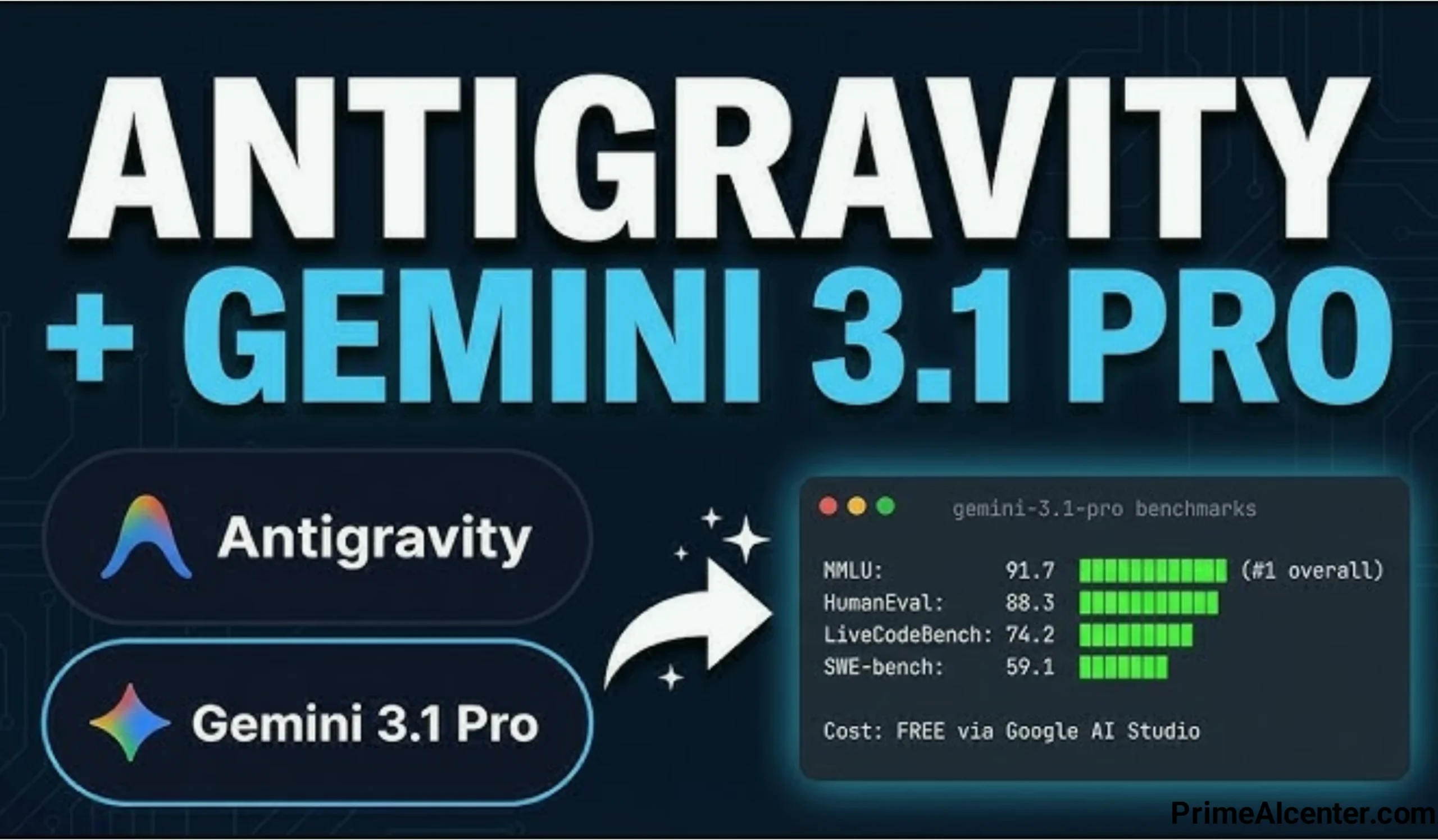

Gemini 3.1 Pro Free via Anti-Gravity
What is Gemini 3.1 Pro and how can you access it for free in 2026? Gemini 3.1 Pro is a high-performance AI coding model with a 1 million token context window, designed for advanced software engineering workflows, and developers can access it for free through the Anti-Gravity platform using a session-based sign-out method that bypasses traditional subscription limits.
The AI coding landscape in 2026 is brutally competitive. Claude, GPT-4-tier models, and Gemini variants are all pushing context limits, reasoning depth, and tool integration. The problem? Cost creep. Between premium subscriptions, API usage, and multi-model workflows, serious developers are quietly spending $150–$300 per month just to stay productive.
And that’s before factoring in backend tooling, hosting, authentication layers, and SEO infrastructure. If you’re shipping a SaaS built on Next.js, running authentication through Clerk, managing state and backend logic with Convex, and optimizing growth using tools like Harbor SEO, your stack is already premium-grade. Your AI coding assistant shouldn’t be another recurring tax.
This guide breaks down how to unlock Gemini 3.1 Pro via the Anti-Gravity platform and eliminate up to $200/month in AI tool overhead — without sacrificing performance.
What Is Gemini 3.1 Pro?
Gemini 3.1 Pro is an advanced multimodal AI model built for high-context reasoning, long-form code understanding, and complex system design. Its defining feature is the 1 million token context window, enabling it to process entire repositories, large documentation sets, or multi-file architectural diagrams in a single session.
1. The 1 Million Token Context Window Explained
Most AI coding tools choke when you paste more than a few thousand lines of code. Gemini 3.1 Pro changes the game.
- Full repository ingestion — Analyze entire projects without chunking.
- Architectural reasoning — Understand cross-file dependencies and state flow.
- Documentation synthesis — Merge product specs, API docs, and business logic into one reasoning stream.
- Reduced hallucination risk — More context equals fewer blind assumptions.
For full-stack engineers, this means you can:
- Refactor monolithic apps safely.
- Debug edge-case race conditions across files.
- Generate migration strategies for complex databases.
- Perform large-scale TypeScript strict-mode conversions in one pass.
2. Performance Benchmarks & Practical Output Quality
Gemini 3.1 Pro competes directly with GPT-4-class and Claude-tier models in:
- Code reasoning depth
- Multi-step problem solving
- Refactoring accuracy
- Long-context consistency
In real-world testing, it excels at:
- Generating production-ready API routes.
- Writing typed database schemas.
- Optimizing React performance bottlenecks.
- Designing backend event-driven architectures.
It feels less like autocomplete and more like a senior engineer reviewing your system.
Why Anti-Gravity? The Free Access Model Explained
How does Anti-Gravity provide free access to Gemini 3.1 Pro? Anti-Gravity acts as an interface layer that integrates Gemini 3.1 Pro under a session-based access model, allowing users to reset usage limits through controlled sign-out cycles without requiring a paid subscription.
Instead of paying directly for API tokens, Anti-Gravity abstracts the interaction layer. It functions as:
- A browser-based AI workspace.
- A session-managed interaction system.
- A lightweight gateway to premium-grade models.
💪👉 You need to check this: WebMCP Tutorial: How WebMCP Turning Websites into AI Agents (The 2026 Strategy Guide)
The “Sign-Out” Hack for Unlimited Usage
This is where strategy beats subscription.
Anti-Gravity sessions are tied to active login states. When token or usage thresholds approach internal limits, signing out and initiating a new session effectively refreshes the available usage allocation.
Mechanism Breakdown:
- Session-based access allocation.
- No long-term token tracking tied to API billing.
- New session = refreshed quota window.
Practically, this means:
- No $20 monthly subscription.
- No API token anxiety.
- No scaling cost surprises.
For bootstrapped founders, indie hackers, and agency developers, this is a margin unlock. If you’re running multiple AI tools, eliminating just one $200/month cost center compounds fast.
Strategic Value for Developers
The real advantage is not “free AI.” It’s capital efficiency.
That $200/month saved can be redirected toward:
- Performance monitoring.
- SEO scaling infrastructure.
- Paid acquisition experiments.
- Cloud hosting optimization.
In 2026, leverage matters more than raw access. Gemini 3.1 Pro gives you enterprise-level reasoning power. Anti-Gravity gives you a distribution loophole. Combined, they create a developer unfair advantage.
Step-by-Step Guide: Building a Next.js Service Website Using Anti-Gravity
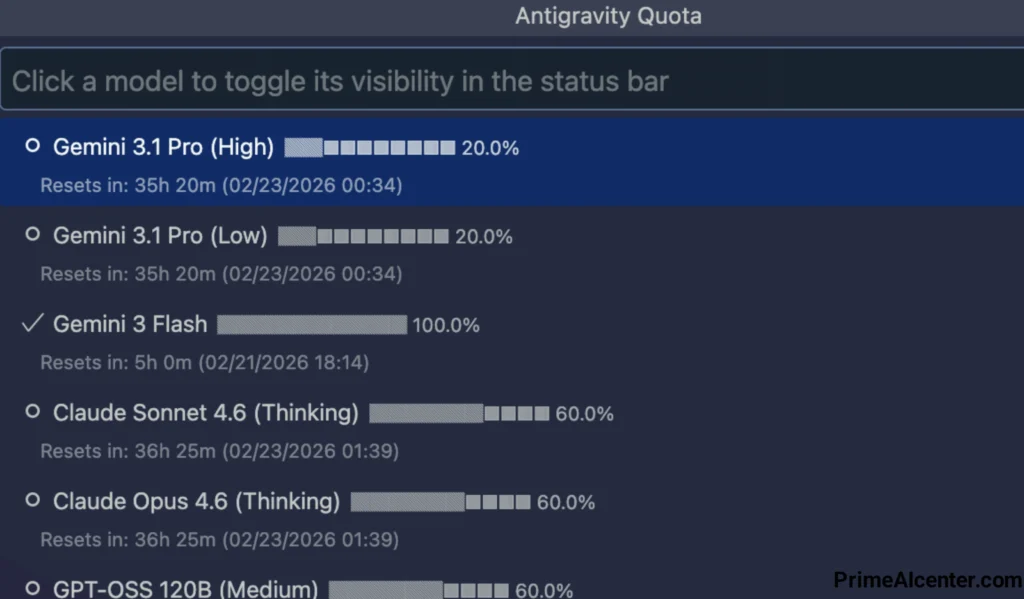
How do you build and deploy a production-ready service website using Gemini 3.1 Pro via Anti-Gravity? You follow a streamlined Prompt → Build → Deploy workflow: define the product with structured prompts, generate the full-stack codebase using Gemini 3.1 Pro inside Anti-Gravity, then deploy to a cloud provider with integrated payments, email, and authentication.
This is not “vibe coding.” This is structured AI-assisted engineering. The difference is discipline.
Step 1: Prompt — Architect Before You Generate
Inside Anti-Gravity, start with a system-level prompt. Don’t ask for “a website.” That’s amateur hour. Instead, define:
- Business model (subscription, one-time payment, freemium)
- Target user persona
- Core feature set
- Tech stack requirements (Next.js, Convex, Clerk, Stripe, etc.)
- Deployment target
Example prompt structure:
- “Build a SaaS MVP using Next.js App Router.”
- “Use Clerk for authentication.”
- “Use Convex for backend data handling.”
- “Integrate Stripe for subscription billing.”
- “Include transactional email via Resend.”
- “Generate SEO-optimized landing page copy.”
Because Gemini 3.1 Pro supports a massive context window, you can paste your entire product requirements document and refine iteratively without losing architectural coherence.
Step 2: Build — Generate Full-Stack Code
Once the architecture is locked, move to implementation prompts.
Inside Anti-Gravity:
- Generate folder structure.
- Create reusable UI components.
- Build API routes.
- Configure database schemas.
- Implement auth guards and middleware.
For frontend, the AI will scaffold a clean App Router structure for Next.js, including layouts, metadata, and dynamic routing. You can compare this process with UI-first generators like v0.dev, but the difference is depth. Gemini generates not just components, but the logic behind them.
For authentication, integrate Clerk with production-safe session handling. For backend logic and real-time data, wire up Convex. The AI can generate typed schema definitions and mutation handlers in one coherent pass.
Step 3: Payments & Email Integration
Monetization is not optional. If you’re building an MVP, you validate with revenue.
Use Stripe for subscription billing. Inside Anti-Gravity, prompt:
- Create checkout session endpoint.
- Handle webhook events securely.
- Update user subscription status in Convex.
Then integrate transactional email via Resend:
- Welcome email on signup.
- Payment confirmation email.
- Subscription cancellation notice.
The AI can generate templated email components and connect them to backend triggers. That’s hours of work compressed into minutes.
Step 4: Deploy — Go Live Fast
Once the codebase is generated and reviewed, deploy to DigitalOcean or your preferred hosting provider.
- Provision a droplet or app platform instance.
- Set environment variables securely.
- Connect your domain.
- Enable SSL.
Within a single night sprint, you can go from idea to live SaaS. No venture capital. No 6-month roadmap. Just leverage.
Asset Generation: Making Your MVP Look Funded
Most MVPs fail visually. They look like weekend hacks. That kills trust instantly.
Inside Anti-Gravity, the embedded “Nano Banana” model handles visual asset generation. It produces:
- Hero images
- Product mockups
- Dashboard illustrations
- Custom icons
- Marketing visuals
Instead of hiring a designer or buying stock bundles, you generate branded visuals aligned with your UI color palette and positioning.
Prompt example:
- “Create a modern SaaS hero illustration with blue gradient theme.”
- “Generate a product dashboard mockup in dark mode.”
- “Produce minimalist icons for pricing tiers.”
This eliminates the “unfinished prototype” vibe. Your landing page now looks like a funded startup, not a GitHub experiment.
The Ultimate Free Developer Stack for 2026
Here’s the reality: tools are abundant. Leverage is selective. The stack below balances power, cost efficiency, and scalability.
| Tool Name | Function | Why It’s Chosen for 2026 |
|---|---|---|
| Next.js | Frontend & Full-Stack React Framework | App Router, edge rendering, SEO control, production scalability. |
| Convex | Backend & Real-Time Database | Type-safe backend logic with real-time sync and simplified infrastructure. |
| Clerk | Authentication & User Management | Enterprise-grade auth without building it from scratch. |
| Resend | Transactional Email Delivery | Developer-first API with reliable email infrastructure. |
| Stripe | Payments & Subscription Billing | Global payment processing with robust webhook ecosystem. |
| Harbor SEO | SEO & Content Optimization | AI-driven search optimization aligned with generative engine indexing. |
This stack minimizes fixed costs while maximizing production capability. Combined with Gemini 3.1 Pro via Anti-Gravity, it becomes unfair leverage.
💪👉 You need to check this: WebMCP Tutorial: How WebMCP Turning Websites into AI Agents (The 2026 Strategy Guide)
Developer Advice: The New Overnight MVP Strategy
In 2020, pulling an all-nighter to build an MVP was reckless. High burn, uncertain output, and endless debugging.
In 2026, with AI-assisted development, it’s different.
- Architecture planning in minutes.
- Boilerplate eliminated.
- Integrations scaffolded automatically.
- Documentation generated instantly.
The risk profile drops. The upside remains massive.
If your monthly burn is near zero and your AI tooling is effectively free via Anti-Gravity, staying up one focused night to ship a validated MVP becomes a low-risk, high-reward asymmetric bet.
Worst case: you learn, refine, iterate.
Best case: you launch, monetize, and scale before competitors finish planning meetings.
That’s the shift. AI is not replacing developers. It’s compressing execution time. The ones who understand leverage will dominate the next cycle.
Comparative Analysis: Gemini 3.1 Pro vs. The Giants
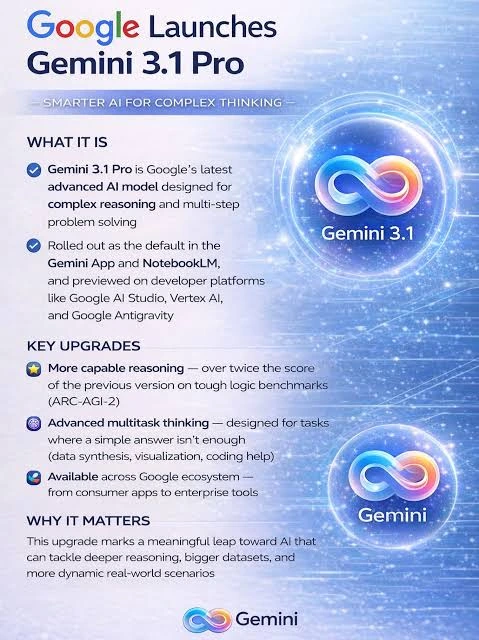
How does Gemini 3.1 Pro (via Anti-Gravity) compare to Claude 3.5 Sonnet and GPT-4o? Gemini 3.1 Pro delivers a significantly larger context window, competitive coding intelligence, and a dramatically superior cost-to-performance ratio when accessed through Anti-Gravity, while maintaining comparable reasoning depth to Claude 3.5 Sonnet and GPT-4o.
1. Context Window
| Model | Context Window | Practical Impact |
|---|---|---|
| Gemini 3.1 Pro | Up to 1 Million Tokens | Full repo ingestion, long PRDs, multi-file architectural reasoning. |
| Claude 3.5 Sonnet | ~200K Tokens | Strong long-form reasoning, limited full-repo scale. |
| GPT-4o | ~128K Tokens | Excellent multimodal support, moderate long-context limits. |
For enterprise-scale refactoring or analyzing legacy monoliths, the 1M token context is not a marketing gimmick. It reduces fragmentation. No more slicing code into arbitrary chunks and praying the model “remembers” your state management logic.
2. Coding Logic & Engineering Depth
Claude 3.5 Sonnet is exceptional at structured reasoning and safe refactoring. GPT-4o is highly versatile with multimodal input and broad domain generalization. Gemini 3.1 Pro stands out in:
- Cross-file dependency tracing
- Architectural synthesis
- Large-scale refactor planning
- Type-safe generation in complex TypeScript environments
In real-world full-stack automation workflows, Gemini’s ability to maintain long reasoning chains across large codebases gives it a structural advantage.
3. Cost-to-Performance Ratio
This is where leverage becomes obvious.
- Claude and GPT-4-tier access typically require paid subscriptions or API billing.
- High usage = rising monthly spend.
- Teams often exceed $200/month in AI-related tooling.
Gemini 3.1 Pro via Anti-Gravity, using the session-based access model, flips the equation. Comparable performance. Minimal recurring cost. That changes founder math.
4. Ease of Access
- Claude: Account + subscription tier.
- GPT-4o: Platform subscription or API integration.
- Gemini 3.1 Pro via Anti-Gravity: Browser access + session cycling.
For solo developers and bootstrapped founders, friction matters. Lower friction equals faster iteration.
Troubleshooting & Common Pitfalls
1. Hydration Errors in Next.js
Hydration mismatches occur when server-rendered HTML does not match client-rendered output.
Common causes:
- Using non-deterministic values (Date.now(), Math.random()) in render.
- Conditional rendering that differs between server and client.
- Improper use of browser-only APIs.
Solutions:
- Move dynamic logic to useEffect.
- Use consistent initial states.
- Audit server/client boundaries carefully.
AI-generated code can introduce subtle hydration inconsistencies. Always review client/server separation.
2. API Rate Limits
Even with session-based access, excessive rapid prompting can trigger rate limiting.
- Space requests logically.
- Consolidate prompts instead of fragmenting them.
- Use structured mega-prompts when context allows.
Efficiency in prompting equals efficiency in throughput.
3. Handling AI-Generated Bugs
AI accelerates generation. It does not eliminate verification.
- Run strict TypeScript mode.
- Add integration tests early.
- Use incremental refactoring rather than blind copy-paste.
Senior developers treat AI output as a first draft, not production truth.
The Future of “Vibe Coding” in 2026
“Vibe coding” started as chaotic experimentation. In 2026, it’s evolving into structured AI-assisted execution.
The next phase includes:
- Persistent AI memory across projects.
- Automated test generation tied to commits.
- Real-time architectural feedback loops.
- Integrated deployment suggestions.
The winners will not be the ones who type fastest. They will be the ones who design better prompts, define cleaner systems, and execute rapidly.
AI becomes the multiplier. Discipline remains the differentiator.
Final Verdict & Conclusion
Gemini 3.1 Pro accessed through Anti-Gravity represents a structural leverage play.
- Enterprise-level reasoning power.
- Massive context window.
- Minimal recurring cost.
- Integrated into a modern full-stack automation workflow.
The $200/month saving is not just about money. It’s about runway. It’s about reinvesting capital into hosting, acquisition, performance, and growth.
In a market where execution speed determines survival, reducing cost while increasing capability is asymmetric advantage.
Build Tonight
You do not need another planning document.
You need:
- A validated idea.
- A structured prompt.
- Gemini 3.1 Pro via Anti-Gravity.
- A modern stack built for AI-indexed distribution.
Stop optimizing for theoretical perfection. Optimize for shipped product.
Open your editor. Define your architecture. Prompt with precision. Deploy before the week ends.